Levels of Transport
Transport in biomedical context occurs at the sub-cellular, cellular, transcellular, tissue/organ, whole body, and populations levels. Some examples include thermoregulation, cellular metabolism, bioheat transfer, bulk flow of blood as an oxygen or thermal energy carrier, membrane transport, and drug diffusion through a tissue.
Clinical and Biomedical Applications
Understanding transport at various levels can help with the design and analysis of a wide range of clinical and bioengineering applications, including but certainly not limited to:
- cryopreservation of cells and tissues
- laser ablation of tumors
- drug dosing and delivery
- dialysis machines
- artificial organs
- gene delivery
- cryosurgery
Generation of Heat
Generation of heat (denoted as \( Q \)) and thermal energy is an important factor to include when analyzing heat transfer in biological contexts. At the cellular level, a major heat generation source is metabolism. Heat generation is a product of cellular respiration. After mitochondria convert nutrients in ATP, heat is released.
Generation can also be due to a heat source added to a system. An example of this is hemodialysis machines, which use resistive heat coils to warm blood to room temperature before dialysis.
A biochemical example of heat generation is a compost pile, in which organic waste is converted by microbial degradation and releases heat in an exothermic process.
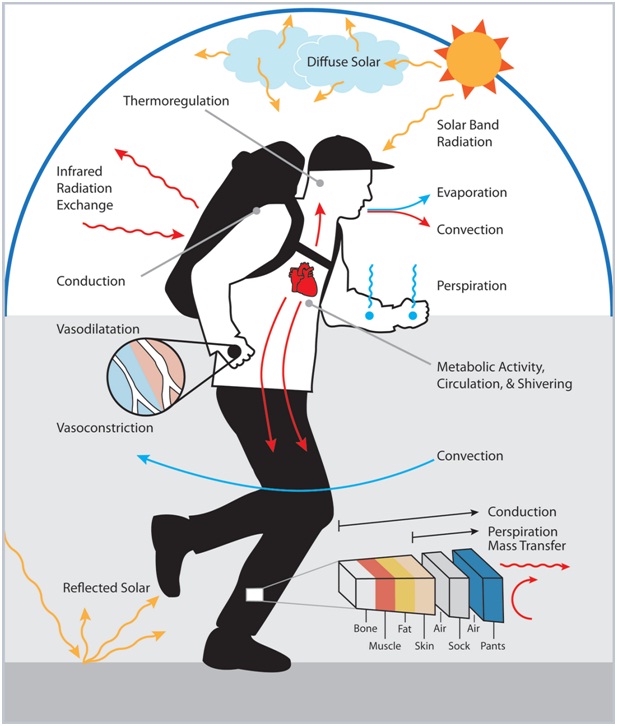
Thermoregulation
Thermoregulation is a homeostatic process that allows animals to maintain constant core temperature by balancing heat gain and loss in response to environmental changes.
Fun Fact!
Elephants cannot sweat. Instead, their ears act as extended fins to drive their thermoregulation process, increasing the rate of heat transfer due to the large surface area. An elephant’s blood flow also adapts as a response to external temperature.