Introduction to Signals and Systems
Defining a Signal in Bioengineering
In a general sense, signals are sets of data points that vary over a domain, usually time or frequency, which encodes information about a system. In bioengineering, we will be envisioning biological processes and other points of interest as a set of information, which we call signals, that will then be sent as inputs to other objects, which we call systems, in which they can be transformed into outputs.
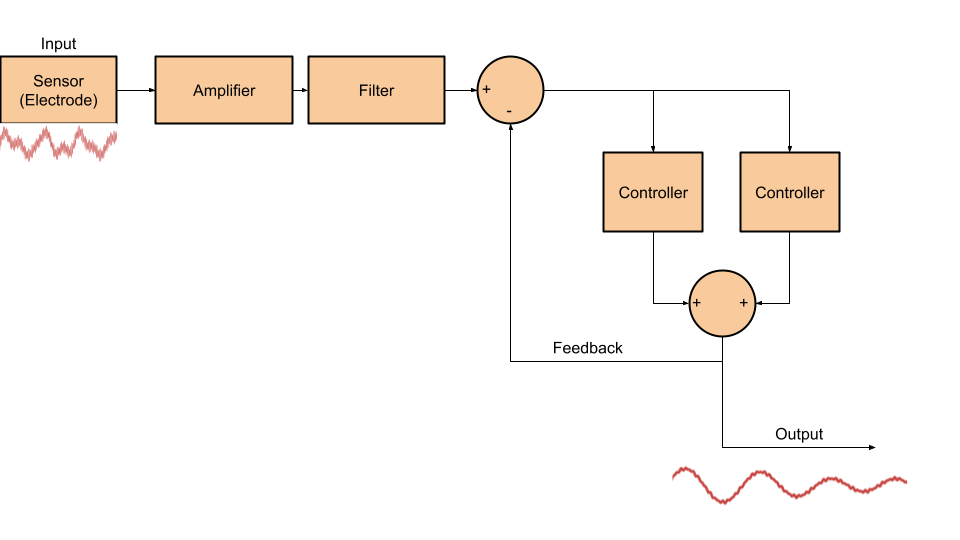
We can modify and interpret the information in signals using mathematical methods we already know to predict how an input will transform when put through defined systems, or allow us to design the system to modify signals in specific ways.
Defining a System in Bioengineering
A system is anything that generates or modifies a signal. The most pertinent system in bioengineering is the human body. The human body consists of multiple systems working together to produce emergent behaviors. These signals can consist of different types of information such as voltage in the Central Nervous System (studied in bioinstrumentation circuits) or pressure in the cardiovascular system (analyzed through fluid transport and conservation principles). Signals can also be measured at different levels, for example, voltage throughout the entire body could be measured, while voltage across a single neuron could be measured instead.
Systems outside of the human body can consist of devices that are used to measure these signals as they often modify signals by amplifying them and filtering out noise to produce results with better Signal to Noise Ratio which are easier to interpret and are more useful to us.
The systems described above generally read signals and gather information, useful for imaging and diagnosis, but other systems can "write". These systems often consist of control systems which use data inputs and feedback to precisely maintain or adjust the state of something, whether it's to keep a room at the right temperature in an AC system, or to ensure the right concentration of drugs in a patient's body by controlling a drug pump.