Types of Charge
The electron, proton, and neutron are fundamental particles that make up all atoms. Electrons and protons have an elementary charge equal in magnitude but opposite in sign. Charge is denoted by q and is expressed in Coulombs. One elementary charge equals \( 1.602 x 10^{-19}C \).
Fundamental Particles
| Fundamental Particle | Mass (g) | Elementary Charge | Charge (C) |
|---|---|---|---|
| Electron | \( 9.11 x 10^{-28} \) | -1 | \( -1.602 x 10^{-19} \) |
| Proton | \( 1.67 x 10^{-24} \) | +1 | \( +1.602 x 10^{-19} \) |
| Neutron | \( 1.67 x 10^{-24} \) | 0 | 0 |
Current i or q̇ is the flow or rate of charge expressed in Amperes or Coulombs per second. Charge can flow through conductive materials such as metals, ionic solutions, or ionized gases.
Electrical energy can describe two different types of energy: electrical potential energy and electromagnetic energy. Electromagnetic energy refers to electric and magnetic fields. Electric potential energy is the flow of electrical current which is relevant to conservation of charge and modeled through electrical circuits.
An electrical circuit is a continuous loop where current moves from a power source, through components, and back to the source. Basic components in a circuit include a voltage source, resistors, capacitors, and inductors.
Electrical Ciruit Components
| Component | Function | Symbol |
|---|---|---|
| Voltage Source (Power Source/Battery) | Provides a fixed voltage across its terminals, pushing current through the circuit. Expressed in volts (V). | 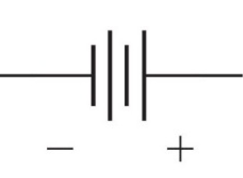 |
| Capacitor | Stores energy in an electric field and resists sudden changes in voltage.Expressed in Farads (F). | 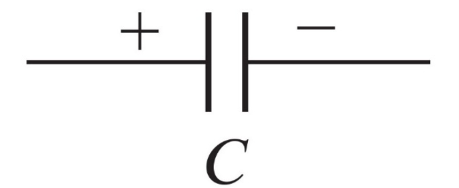 |
| Resistor | Limits or controls the flow of current by converting some electrical energy into heat. Expressed in Ohms (\( \Omega \)). | 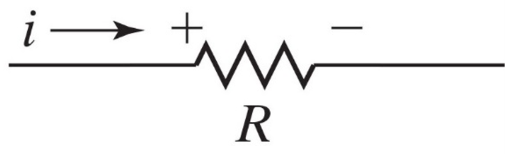 |
| Inductor | Stores energy in a magnetic field and resists sudden changes in current. Expressed in henry (H). | 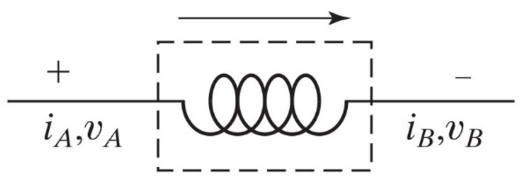 |
Learn More!
To learn about more about circuits, check out Circuits.